
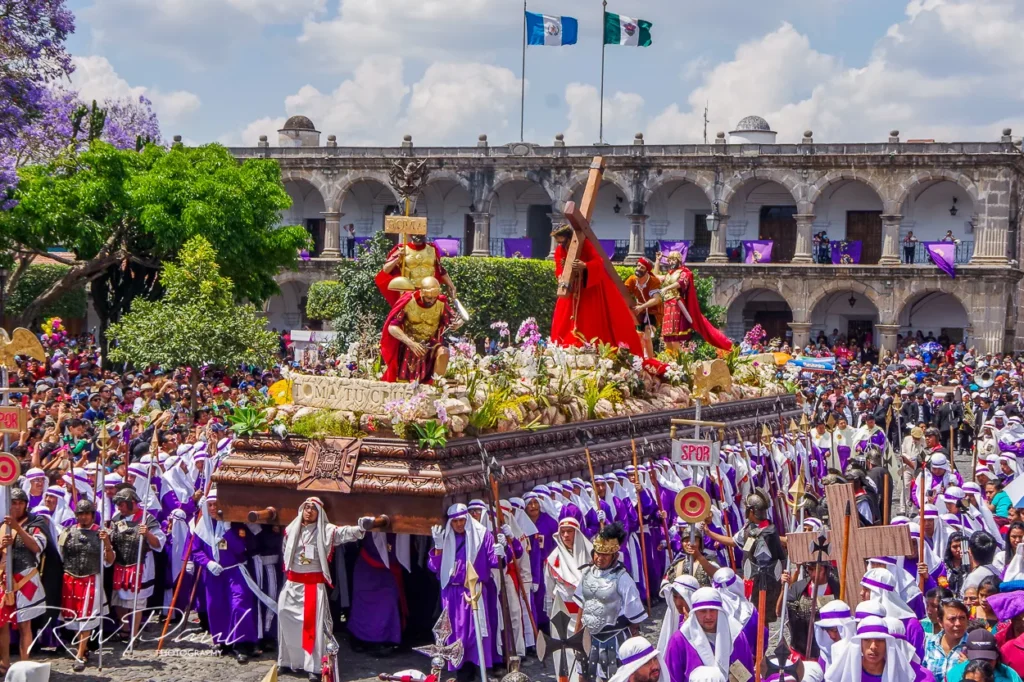
Semana Santa, or Holy Week, stands as one of the most significant religious and cultural events in the Spanish-speaking world. In 2025, this sacred period will run from April 13th to April 20th, offering travelers and locals alike a chance to witness centuries-old traditions that blend deep faith with spectacular public displays.
What is Semana Santa?
Semana Santa marks the final week of Lent, commemorating the last days of Jesus Christ’s life, including his crucifixion and resurrection. This isn’t just a religious observance. It’s a cultural phenomenon that transforms entire cities into open-air theaters of devotion.
The week begins on Palm Sunday and concludes on Easter Sunday. During these eight days, religious brotherhoods called cofradías organize elaborate processions through city streets. Participants carry massive floats depicting biblical scenes, while penitents dressed in traditional robes march solemnly alongside them.
Unlike typical religious services confined to church interiors, Semana Santa brings faith into public spaces. Streets become sacred pathways, and entire communities participate as observers or participants in this collective expression of belief.
Why Semana Santa Matters in 2025
The 2025 celebrations carry particular weight as tourism rebounds and communities seek to preserve traditions that faced disruption in recent years. Cities across Spain, Latin America, and the Philippines are preparing for what many expect to be record attendance.
For believers, this week offers a structured time for reflection and spiritual renewal. The processions provide a tangible connection to stories they’ve known since childhood, making abstract theological concepts feel immediate and real.
For cultural observers, Semana Santa represents living history. Many processions follow routes established in the 16th century. The craftsmanship visible in the religious floats, or pasos, showcases artistry passed down through generations. Some figures carried in these processions are masterworks by renowned sculptors from Spain’s golden age.
The economic impact shouldn’t be overlooked either. Cities like Seville, Málaga, and Antigua Guatemala see significant revenue during this week. Hotels book months in advance, and local businesses prepare year-round for this crucial period.
How Semana Santa Works
Each day of Holy Week follows a specific theme tied to biblical events. The intensity builds as the week progresses, reaching its peak on Good Friday when processions commemorating Christ’s death fill the streets from dawn until late night.
The Procession Structure
Brotherhoods spend the entire year preparing for their designated procession time. Members pay dues, attend meetings, and rehearse their routes. The actual procession typically includes:
- The cross bearer leading the way
- Rows of penitents in pointed hoods and robes
- The paso carried by costaleros (bearers) who walk beneath it
- A brass band playing solemn marches
- Crowds lining streets, often in complete silence
The weight of these floats is staggering. Some pasos weigh over 5,000 pounds and require 40 or more people to carry them. The bearers can’t see where they’re going and rely entirely on a coordinator’s instructions.
Regional Variations
Spain’s Andalusian region hosts the most famous celebrations. Seville’s Semana Santa draws over a million visitors. Its processions run almost continuously from Sunday through Saturday, with more than 60 brotherhoods participating.
In Guatemala, Antigua creates massive street carpets called alfombras using colored sawdust, flowers, and pine needles. Processions walk directly over these intricate designs, destroying hours of work in minutes. The symbolism reflects life’s temporary nature.
The Philippines adds unique elements reflecting both Spanish colonial influence and indigenous traditions. Participants sometimes engage in actual crucifixion reenactments, though the Catholic Church officially discourages this extreme practice.
Tips for Experiencing Semana Santa 2025
Planning Your Visit
Book accommodations at least three months in advance for major cities. Prices rise significantly during Holy Week, and availability disappears quickly. Consider staying in nearby towns if your target city is fully booked.
Arrive at procession routes 30 to 45 minutes early to secure a good viewing spot. Local cafes and bars along procession paths often charge for balcony or window access, but these spots guarantee excellent views without crowd struggles.
Download procession schedules before you arrive. Most cities publish detailed timetables showing which brotherhood processes when and along which route. Apps now exist for major cities that provide real-time updates.
What to Bring
Comfortable shoes are essential. You’ll stand for hours, often on cobblestones. A small folding stool can be a lifesaver, though verify local regulations about bringing them to certain areas.
Pack snacks and water. Processions can last several hours, and nearby shops get overwhelmed. A light jacket makes sense too, as evening processions can run past midnight when temperatures drop.
Bring cash. Many vendors don’t accept cards during the rush, and you’ll want to purchase traditional sweets like torrijas or pestiños from street sellers.
Benefits of Attending
The experience offers something beyond typical tourism. You’re not watching a performance staged for visitors. These are genuine expressions of community identity and religious devotion that would happen whether tourists attended or not.
Photography opportunities are exceptional. The contrast between medieval religious imagery and modern urban settings creates striking compositions. The golden glow of candlelight on baroque sculptures produces images impossible to replicate elsewhere.
The cultural education is invaluable. You’ll understand Spanish and Latin American culture more deeply after witnessing how seriously communities take these traditions. The dedication required to maintain these processions says something profound about collective values and priorities.
Risks and Challenges
Crowds create obvious challenges. Pickpockets target distracted tourists, so secure your valuables and stay aware. Children can easily get separated from parents in dense crowds, so establish meeting points beforehand.
The solemn nature of events requires respectful behavior. Loud conversations during processions are inappropriate. Flash photography directly in participants’ faces shows poor judgment. Remember that for many attendees, this is their most important week of the year religiously.
Physical demands shouldn’t be underestimated. Hours of standing, walking long distances between procession points, and navigating crowded streets require reasonable fitness levels.
Weather can be unpredictable in April. Rain doesn’t always cancel processions, but it can. Having backup plans helps avoid disappointment if your target procession gets postponed.
Opportunities in 2025
Lesser-known cities offer increasingly attractive alternatives to overcrowded tourist hotspots. Zamora, Valladolid, and Cuenca in Spain host processions rivaling Seville’s spectacle without the overwhelming crowds. Their more intimate scale actually enhances the experience for many visitors.
Volunteering opportunities exist for those wanting deeper involvement. Some brotherhoods welcome outsiders to help with setup, though this requires advance contact and usually some Spanish language ability.
The week before Semana Santa offers something special too. Cities conduct final rehearsals, allowing you to see processions without the massive crowds. You’ll sacrifice some atmosphere but gain the ability to move freely and see details impossible to appreciate during actual Holy Week.
Semana Santa 2025 promises to be a powerful reminder that ancient traditions can thrive in the modern world. Whether you approach it as spiritual pilgrimage, cultural education, or travel adventure, this week offers experiences that will stay with you long after Easter Sunday concludes.