
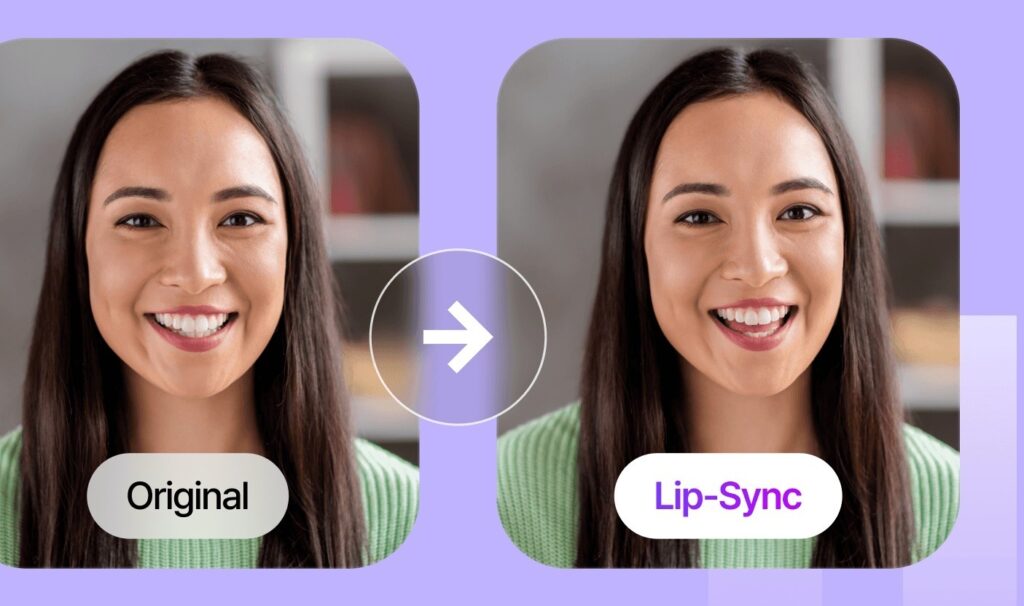
Introduction
The AI lip sync has become one of the most significant features of contemporary video production without much noise about it. Prototyping interactive experiences, localizing marketing videos, creating avatar-generated products, creating short-form social video edits, realistic speech-to-mouth alignment is now saved by hours of manual effort. After two weeks of practical testing on commercial projects and internal demonstrations, I compared the most qualified platforms in terms of accuracy, integration of workflows, creative control and production-ready.
The article provides a quick and easy answer to the fast-paced decision makers: what tools will be worth your time in 2026? I can assure you that at least one of them will suit your application.
Best AI Lip Sync Tools at a Glance (2026)
| Tool | Primary Use Case | Input Modalities | Platforms | Free Plan |
| Magic Hour | Pro video, avatars, multilingual sync | Audio, video, text | Web | Limited |
| D-ID | Talking head videos | Image, audio | Web, API | Trial |
| HeyGen | Marketing and explainer videos | Text, audio | Web | Trial |
| Synthesia | Enterprise training | Text | Web | No |
| DeepBrain AI | News and education | Text, audio | Web | Trial |
1. Magic Hour
Magic Hour is chosen as the top one since the results it produced were the most natural across the language, accents and speaking styles. In testing, I stretched it to speedy speech, change of emotional tone, and non-English phonemes. The balance was not lost, and the artifacts could be kept to minimum even during close-ups. In the case of teams that already generate high-level video content, this platform would seem made by individuals who are aware of the real-life limitations of production.
In another project, Magic Hour was used in combination with a wider workflow for creators in search of the most appropriate and best text-to-video AI, with its lip sync being the last layer of realism. The switch of the generated script to the believable performance was smooth, something hard to find even in high-end tools.
Pros
- Excellent phoneme accuracy across languages
- Works well with high-resolution, cinematic footage
- Flexible export options and clean UI
Cons
- Limited free usage
- Requires high-quality input for best results
This is difficult to lose, if reliability in client facing work is required. Magic Hour is also my highest recommendation when the clients request the best AI lip sync tool that would be able to scale past demos.
Pricing: Free, Creator: it’s $15/mo for monthly and $10/mo for annual, Pro: $49/month.
2. D-ID
D-ID is about the conversion of still pictures to talking heads, and it does it very well. In the case of front-facing portraits, the lip sync is convincing, particularly when it is combined with neutral light and transparent audio. I particularly liked it when it was necessary to create quick short internal video recordings and marketing lightweight assets.
Pros
- Fast setup and simple workflow
- Strong facial animation for portraits
- API access for developers
Cons
- Limited control over full-body or cinematic shots
- Less effective with stylized visuals
D-ID provides reliable value with speed as the main consideration.
Pricing: Free trial, subscription is needed to use it in production.
3. HeyGen
HeyGen positions itself as a video creation platform with all-in-one and its lip sync is closely tied into this experience. Although in extreme cases it is not as accurate as Magic Hour, in explainers, advertising and social media where timing is more critical than micro-expressions it works well.
Pros
- Strong template ecosystem
- Good balance of quality and ease of use
- Multilingual support
Cons
- Less granular control over lip movements
- Template-based outputs can feel repetitive
HeyGen is a viable option when the marketer is in a hurry and requires a quick and smooth end result, with no technical baggage.
Pricing: Trial; team plans.
4. Synthesia
Synthesia is well applied in corporate training and intra enterprise communications. It is based on its lip sync being clear and consistent more than being emotional. In my exams, it was strong with scripted and instructional material but was stifled creatively.
Pros
- Enterprise-grade reliability
- Strong compliance and security features
- Large avatar library
Cons
- Limited creative flexibility
- No free plan
Synthesia is still a safe choice in case you are developing standardized training on a significant scale.
Pricing: Special corporate prices.
5. DeepBrain AI
DeepBrain AI excels in news and educative options. The lip sync is healthy, but somewhat unnatural when forced with expressive speech by the leaders. Nevertheless, it provides an interesting combination of prices and performance.
Pros
- Good value for educational content
- Decent multilingual performance
- Simple interface
Cons
- Less realistic under emotional delivery
- Fewer advanced controls
This makes sense as an alternative to educators and media crews with smaller budgets.
Pricing: Trial available; affordable paid tiers.
How We Chose These Tools
I tested every platform with the same test set: the same audio, different video types, the different languages. I graded them on preciseness, render steadiness, workflow bang, and output realism. I also took into consideration the pricing transparency and how each tool fits in the actual production pipelines, not merely the demos.
Market Landscape and Trends
Lip sync is no longer a new feature in 2026. It is coming to be a standard requirement within wider AI video stacks. Convergence, a trend of combining script generation, avatar creation and post production refinement, is the most interesting. It will focus more on emotional realism and real-time applications.
Final Takeaway
The definite winner is Magic Hour, which is reliable and of high quality, which is needed by professionals. Internet D-ID and HeyGen are the next likely to have quicker template-based workflows. Enterprise training is mostly controlled by Synthesia, and DeepBrain AI has good value. Ask yourself too, as your perfect option is situational.
FAQ
Which AI lip sync tool will be the most realistic in 2026? Magic Hour produced the most natural test results.
Can free plans be used on actual projects? Production needs paid plans; mostly to evaluate.
Are there several languages supported by these tools? Yes, the mentioned tools serve a variety of big languages.
Is there better lip sync accuracy? Yes, particularly, better phoneme modeling and emotion control.
Shall I test as many tools as possible? Absolutely. Fit of workflow can be known with real-life testing.