
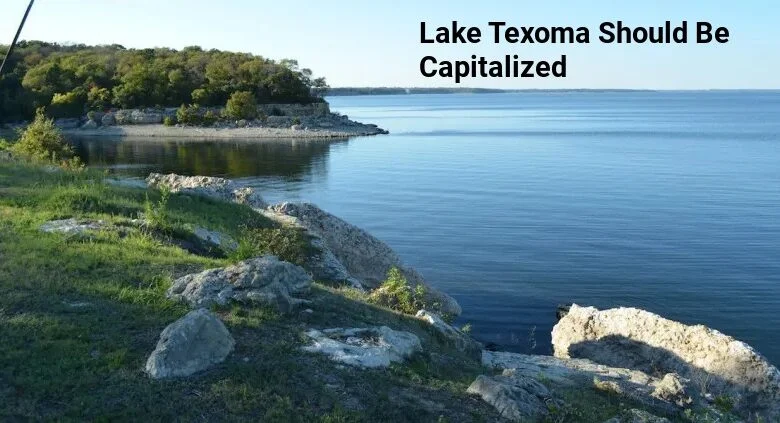
When you’re writing about one of America’s most popular recreational lakes, getting the name right matters. The phrase “lake texoma should be capitalized” might seem like a grammar nitpick, but understanding why proper nouns deserve capital letters helps you write more professionally and credibly.
Let’s break down everything you need to know about capitalizing Lake Texoma and why it matters for your writing.
Why Lake Texoma Should Be Capitalized
Lake Texoma is a proper noun. It’s the specific name of a particular reservoir straddling the Texas-Oklahoma border. Just like you wouldn’t write “new york city” or “mount everest,” you shouldn’t write “lake texoma.”
The rule is straightforward. When a body of water has a specific name, both the generic term (lake, river, ocean) and the proper name get capitalized. This applies whether you’re writing a travel blog, a news article, or social media post.
Think about it this way. If someone told you they visited “the grand canyon” last summer, it would look odd. The same principle applies when lake texoma should be capitalized in your content.
The Grammar Rule Behind Lake Names
English capitalization rules for geographic features follow a consistent pattern. When you use the official name of a place, you capitalize all significant words.
Here’s how it works with Lake Texoma:
- Lake Texoma (correct)
- lake texoma (incorrect)
- Lake texoma (incorrect)
- LAKE TEXOMA (acceptable in headlines, but not standard body text)
The generic word “lake” becomes part of the proper noun when paired with “Texoma.” You can’t separate them. They function as a single unit identifying this specific location.
Compare this to generic usage. If you write “we visited three lakes in Oklahoma,” the word “lakes” stays lowercase because you’re not naming specific bodies of water. But the moment you identify which lake, lake texoma should be capitalized.
Common Mistakes People Make
Writers often get tripped up on capitalization when they think of “lake” as just a descriptive word. They might capitalize Texoma but leave lake lowercase, writing “lake Texoma.”
This mistake happens because people treat “lake” like an article (the, a, an) rather than part of the proper name. But Lake Texoma is the full, official name of this reservoir.
Another common error occurs in casual writing. Social media posts, text messages, and quick emails often skip capitalization entirely. While this might be fine for personal communication, any public-facing content should follow standard rules.
Media Spank regularly covers language and writing best practices, noting that proper capitalization builds credibility with readers. When you get the basics right, people trust your content more.
When Lake Texoma Should Be Capitalized in Different Contexts
In News Articles and Journalism
Professional news outlets always capitalize Lake Texoma. AP Style, the standard for journalism, requires capitalizing the full names of rivers, lakes, and other water bodies.
If you’re writing news content or press releases about events at this location, lake texoma should be capitalized every single time you mention it.
In Marketing and Tourism Content
Tourism websites, brochures, and promotional materials need proper capitalization. When you’re trying to attract visitors, professional presentation matters. Seeing “lake texoma” in marketing copy looks unprofessional and might make potential visitors question the quality of information.
In Academic and Scientific Writing
Research papers, environmental studies, and academic journals maintain strict capitalization standards. Whether you’re discussing the ecological system, water quality, or recreational usage patterns, Lake Texoma appears capitalized in scholarly work.
On Social Media and Blogs
Even in casual digital spaces, lake texoma should be capitalized when you want your content taken seriously. Travel bloggers, fishing enthusiasts, and outdoor recreation accounts benefit from proper grammar that makes their expertise credible.
Understanding Proper Nouns vs Common Nouns
The distinction between proper and common nouns determines capitalization across English writing.
Common nouns are general categories:
- A lake
- The river
- Any ocean
- Several mountains
Proper nouns are specific names:
- Lake Texoma
- The Mississippi River
- The Pacific Ocean
- The Rocky Mountains
When lake texoma should be capitalized becomes obvious once you recognize it as a proper noun. It’s not just any lake. It’s a specific, named location with legal boundaries, official management, and unique characteristics.
Regional Variations and Local Usage
People living near Lake Texoma sometimes get casual with capitalization in everyday conversation and informal writing. Local Facebook groups, community forums, and text messages might show “lake texoma” without capitals.
This regional informality doesn’t change the grammatical rule. In any published, professional, or public-facing content, standard capitalization applies.
Interestingly, real estate listings, business names, and official signage around the lake consistently use proper capitalization. The Lake Texoma Association, marinas, resorts, and state park services all capitalize the name correctly.
How Search Engines Handle Capitalization
Here’s good news for SEO. Google and other search engines generally don’t distinguish between “Lake Texoma” and “lake texoma” in search queries. They understand searcher intent regardless of capitalization.
However, when your content appears in search results, proper capitalization makes your title and description look more professional. Users scanning results often skip over content that looks carelessly written.
Additionally, when other websites and sources cite or link to your content, they’re more likely to reference professional, well-written material. Building authority means sweating the small details.
Teaching Capitalization Rules
If you’re a teacher, parent, or mentor helping someone learn proper writing, Lake Texoma makes an excellent example. It’s a concrete, real-world application of capitalization rules.
Students often understand abstract grammar better when tied to actual places they know or can visit. Explaining why lake texoma should be capitalized connects the rule to something tangible.
The lesson extends beyond just this one lake. Once someone understands the principle, they can apply it to:
- Lake Michigan
- Lake Superior
- Lake Powell
- Any other named body of water
The Historical Context
Lake Texoma was created in 1944 when Denison Dam was completed. The name combines “Texas” and “Oklahoma,” the two states it borders. From its very inception, official government documents, engineering reports, and public announcements capitalized the full name.
Historical records, newspaper archives, and official correspondence show consistent capitalization throughout the lake’s 80-year history. This consistency isn’t accidental. It reflects proper naming conventions for geographic features.
Legal and Official Documentation
Property deeds, legal descriptions, and official government documents always show “Lake Texoma” with full capitalization. Legal writing demands precision, and proper nouns receive consistent treatment.
The U.S. Army Corps of Engineers, which manages the reservoir, uses standard capitalization in all publications. State agencies in both Texas and Oklahoma follow the same convention.
When lake texoma should be capitalized extends beyond style preference into official, legal language that defines boundaries, rights, and jurisdictions.
International English Standards
British English, American English, Australian English, and other variants all agree on capitalizing proper nouns. The rule transcends regional differences in spelling and vocabulary.
Whether you’re writing for a UK audience or American readers, Lake Texoma gets capitalized. This universal standard makes geographic names consistent across English-speaking countries.
Digital Publishing and Content Management
Content management systems, blogging platforms, and website builders don’t automatically capitalize words. You need to type them correctly.
Some writers rely on autocorrect, but these tools don’t always catch proper nouns, especially less common names. You need to know the rule yourself.
When publishing content about Lake Texoma, double-check your capitalization before hitting publish. A quick proofread catches these errors before your audience sees them.
Building Writing Credibility
Professional writers understand that credibility comes from consistent attention to detail. Getting basic grammar right signals to readers that you know your subject.
If you can’t capitalize a lake name correctly, readers might question other facts in your article. This matters especially for content about travel, real estate, recreation, or local business.
When lake texoma should be capitalized might seem minor, but these details separate amateur content from professional work.
Quick Reference Guide
Here’s a simple checklist for proper capitalization:
- Always capitalize both “Lake” and “Texoma” when used together
- Capitalize in headlines, body text, and captions
- Maintain capitalization in hashtags when possible (#LakeTexoma)
- Use capitals in business names that include the lake name
- Apply the same rule to related features (Texoma Marina, Lake Texoma State Park)
Final Thoughts on Proper Lake Capitalization
Understanding why lake texoma should be capitalized connects to broader writing principles. Proper nouns get capitals. Geographic features with specific names follow this rule. It’s not complicated once you grasp the logic.
Whether you’re writing a fishing report, real estate listing, travel guide, or news article, taking the time to capitalize Lake Texoma correctly makes your content look professional. It shows respect for grammar rules and attention to detail that readers notice and appreciate.
The next time you write about this beautiful reservoir on the Red River, remember that Lake Texoma deserves the capital letters that mark it as a unique, special place worth visiting and writing about correctly.